
Everything Ofsted inspects you on. One place. No scramble.
An introduction to Otii – what it does, how it works, and why we built it this way.
I wrote recently for Nursery Management Today about what Ofsted's September 2025 Inspection Toolkit is actually asking for – and why so many settings are finding it harder to evidence than it needs to be. The short version: the framework isn't asking you to do more. It's asking you to be clearer.
The longer version is what Otii is built to solve.
This isn't just about Ofsted
Let's be honest about something. Inspection readiness is the hook – it's the thing that concentrates the mind. But the reason settings need a platform like Otii isn't because Ofsted visits once every few years. It's because the daily requirements of running a safe, compliant, high-quality early years setting are genuinely enormous.
Safeguarding responsibilities. Staff suitability. Risk assessments. Inclusion plans. Curriculum oversight. Training records. Supervision. SEND documentation. The list doesn't pause between inspections. Neither do the consequences if something is missed.
Otii exists so that everything required to keep children safe and settings running properly has one home. Not a shared drive. Not a folder system. Not a combination of WhatsApp, paper files, and one person's memory. One place, always up to date, accessible to the whole team.
The Ofsted readiness picture is the output of doing all of that well every single day. When you have good systems, inspection stops feeling like a performance – and starts feeling like a reflection of everyday life. That's the goal.
Good systems aren't about control. They're about kindness. They protect staff, reduce reliance on memory, and mean you can sleep at night knowing nothing has been missed.

A word on consultants
We have a lot of respect for the consultants working in this sector. They know their stuff. They come in, observe practice, spot the gaps, and give leaders the clarity they need. That kind of expert eye and honest external view is genuinely valuable – and we'd never suggest otherwise.
But here's the question we hear from settings all the time: when the consultant leaves, where does all of that advice actually sit?
It's in the report. Maybe in an email. Possibly in a folder that the manager who commissioned it has since left. And the next time something changes – a new framework, a new staff member, a new room – the setting goes back to square one.
Otii doesn't replace the expert eye. What it does is give that expertise a permanent home. The framework is built in. The guidance is there every day. New staff can access it. The manager on maternity leave didn't take it with her. The knowledge stays in the building – because it was never just in one person's head to begin with.
Great consultants make settings better. Otii makes sure the improvement sticks.
The Inspection Hub – your live readiness picture
This is where the interpretation of the September 2025 Ofsted Inspection Toolkit lives. All seven inspection evaluation areas are mapped in here – Leadership and Governance, Safeguarding, Children's Welfare, Behaviour, Attitudes and Routines, Inclusion, Curriculum and Teaching, and Achievement – with plain English guidance on what strong practice looks like in your setting. Not what the Toolkit says. What it means in practice, on the floor, every day.
As your team works – logging concerns, completing checks, finishing micro-learning – the Inspection Hub updates automatically. Not a report you generate before an inspection. A live picture of where your setting stands, right now.

Micro-learning – not tick-box training
The training layer inside the Inspection Hub is built around micro-learning: short, focused scenarios that reinforce what staff already know and fill the gaps from an Ofsted lens. A real situation, answered in their own words. Otii's AI reads the response and flags Green, Amber, or Red.
Managers see the difference between a team that has completed training and a team that can actually apply it – which is exactly what the September 2025 Toolkit requires. Staff demonstrate understanding in practice, not just record completion.
This is not about testing people. It's about giving the whole team confidence – and giving managers the visibility to support staff before an inspector asks the question.
Coming soon: A deep dive into the Inspection Hub – how the readiness score works and what it tells you about your setting's real position.
Safeguarding Hub – the whole-team safeguarding culture Ofsted is looking for
Safeguarding is now judged as its own evaluation area under the new framework. And what inspectors are looking for isn't impressive policies or a well-organised DSL folder. It's a whole-team safeguarding culture – every member of staff, from the room leader to the newest apprentice, who understands their responsibilities and can evidence them.
The Safeguarding Hub is built for the whole team, not just management and senior leadership. Concern logs, DSL oversight, allegations management, a KCSIE-aligned decision tree, whistleblowing records – all timestamped, immutable, and audit-trailed. An inspector asks how you handled a concern six months ago. You show them. Every decision recorded. Every action evidenced.
Body mapping that protects the children – and your staff
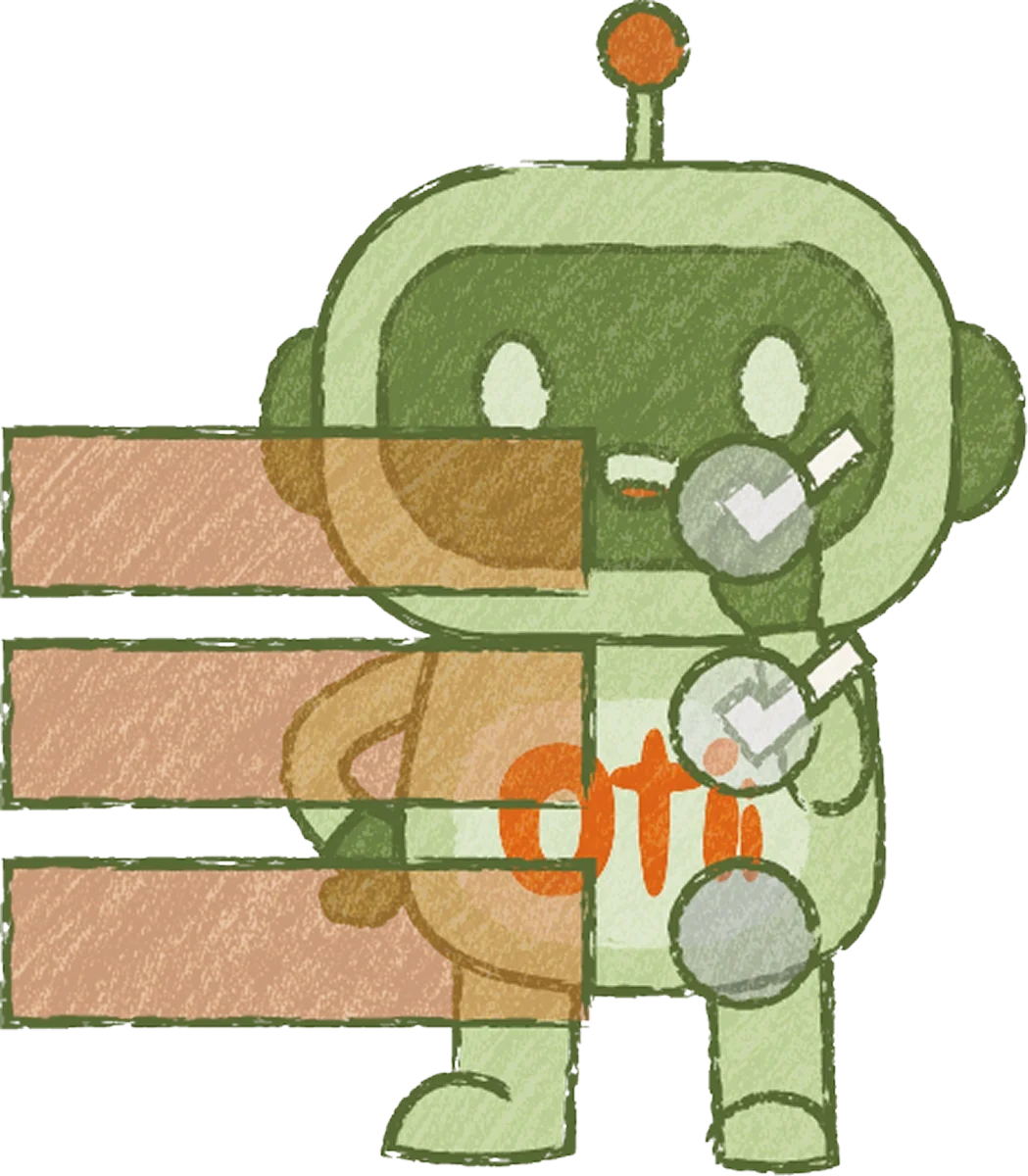
Our accident and incident forms include advanced body mapping with automatic safeguarding alerts. When a mark or injury is logged and mapped, the system assesses whether it warrants escalation – and if it does, the DSL is alerted immediately. Not after the fact. In the moment.
This matters especially for apprentices and agency staff who are newer to practice and may not yet have the experience to know what they're looking at. The system catches what a person might not. You cannot rely on people knowing what they don't know – so Otii doesn't ask them to.
Coming soon: Safeguarding under the new framework – building the whole-team culture inspectors are looking for, not just the paper trail.
Compliance Hub – the daily operational backbone
The Compliance Hub is where your setting's day-to-day regulatory requirements live. Room checks, risk assessments, ratios, documentation – all the things that need to happen consistently, not just when an inspection is coming.
Checks that flag issues automatically create tasks. Nothing falls through the gaps because someone was busy or a shift changed. Leaders get visibility across the setting without having to chase. And when Ofsted asks how you maintain oversight of your operational standards, you have a clean, timestamped record of exactly that.
Coming soon: What operational compliance actually looks like under the new framework – and why the daily rhythm matters more than the pre-inspection sprint.
Children's Welfare – evidencing what you already do
Children's Welfare is one of Ofsted's seven named evaluation areas in the September 2025 Toolkit – and one of the areas where settings are often doing brilliant things but struggling to show it clearly.
Otii's Children's Welfare inspection module pulls from the relevant operational hubs to build your live picture in this area. Settling-in practice, care routines, key person oversight, wellbeing records – all feeding into one coherent view. No separate systems. No manual compilation before an inspection. The evidence is already there because it's built into how your team works every day.
Coming soon: Children's Welfare under the new Ofsted framework – what inspectors are looking for and how to evidence it without extra paperwork.
Behaviour, Attitudes and Routines – the room culture inspectors can feel
Inspectors don't just ask about behaviour – they observe it. They walk into a room and they can feel whether children are settled, whether routines are consistent, whether staff responses are calm and purposeful. Behaviour, Attitudes and Routines is one of the seven inspection evaluation areas, and it's one where the gap between what a setting intends and what actually happens on the floor is most visible.
The Behaviour, Attitudes and Routines module in the Inspection Hub helps staff understand what strong practice looks like in this area – through micro-learning framed around real room scenarios – and gives managers a view of whether that understanding is shared consistently across the team.
Coming soon: Behaviour, Attitudes and Routines – what Ofsted is really observing, and how to build the consistent room culture that speaks for itself.
Leadership and Governance – the area that underpins everything else
Leadership and Governance sits at the top of the September 2025 Inspection Toolkit for good reason. It's the area that determines whether everything else is working. Inspectors are looking for leaders who know their setting – genuinely – who can articulate where it is strong and where it needs to improve, and who have the systems in place to act on that knowledge.
The Leadership and Governance module in the Inspection Hub maps the criteria clearly and gives leaders the structure to reflect on their oversight honestly – not to perform confidence, but to build it. When your systems are in order, when your team is trained, when your records are live and accurate, leadership conversations with inspectors stop being the most stressful part of the day.
Coming soon: Leadership and Governance under the new framework – what inspectors mean by 'oversight', and how good systems make the difference.
Achievement – knowing your children and showing it
Achievement is the area that asks the deepest question: what difference is your setting making to the children in it? Under the September 2025 Toolkit, this isn't about data or tracking spreadsheets. It's about whether staff know individual children well, whether progress is recognised and celebrated, and whether the setting responds effectively when a child needs more support.
The Achievement module in the Inspection Hub connects to the child journey evidence from your nursery management system – so the picture inspectors are looking for isn't something you assemble at the last minute. It's already there, because it's been built through good daily practice. Managers have reflection prompts to help them articulate what achievement looks like across their cohort and what they've done when children needed a different approach.
Coming soon: Achievement under the new Ofsted framework – what 'knowing your children' actually means in practice, and how to evidence it without over-assessing.
Staff Hub – a live SCR and the supervision oversight your setting needs
The Staff Hub is built around two things that keep settings legally compliant and inspection-ready at all times: a live Single Central Record and a supervision dual process tracker.
Live Single Central Record
Your SCR updates automatically as staff join and leave. No more manual spreadsheets. No more pre-inspection panic to check it's current. The record is always up to date – DBS checks, qualifications, references, suitability confirmations – and always accessible to whoever needs to see it. When an inspector asks to view your SCR, you're not scrambling. You're ready.
Supervision dual process tracker
Supervision isn't just a wellbeing conversation – it's a professional development and oversight requirement. The dual process tracker keeps both threads in one place: the pastoral check-in and the professional development review. Managers can see at a glance what's due, what's been completed, and where staff need support – across the whole team, not just the people they remember to follow up.
Micro-learning built around what staff need to know
Training records and micro-learning sit here too – reinforcing understanding from an Ofsted lens, short enough to fit into a busy shift, and connected directly to the inspection readiness picture in the Inspection Hub.
Coming soon: The live SCR, supervision, and why staff records are one of the first things an inspector asks to see.
Inclusion Hub – the government framework, finally in one place
The Department for Education publishes SEND assessment guidance and resources for early years providers – a practical, child-centred framework to identify and meet children's needs as early as possible. Those resources were developed by Dingley's Promise in collaboration with the Department for Education. Dingley's Promise is the largest specialist provider of nursery education to children under five with SEND in England, and a leading voice in inclusive early years practice.
The guidance is excellent. The problem is using it day to day: clicking through GOV.UK, downloading PDFs, printing forms, filing paper. For the children who need the most careful attention, the admin burden has historically been the highest. That's not good enough.
Otii digitises this end-to-end. SEND plans, graduated approach steps, specialist referral pathways, adapted evidence and EYPP funding tracking – all in one place, linked directly to your Ofsted readiness picture. Leaders can show exactly how EYPP funding is being used for the children it's meant for. The paperwork stops being a barrier to the practice.
Coming soon: A dedicated deep-dive on the Inclusion Hub – the graduated approach explained plainly, what Ofsted expects under the new framework, and how to evidence inclusion without the paper mountain.
Curriculum Hub – articulate what you do and share it with your whole team
Curriculum is one of the most significant evaluation areas in the September 2025 Toolkit. Inspectors want to understand your intent – what you want children to learn and why – and whether that intent is actually shared and understood by the staff delivering it in the room every day.
The Curriculum Hub gives settings the space and structure to do exactly that. Leaders can articulate their curriculum clearly – what it is, why it's designed that way, how it connects to the EYFS requirements – and share it directly with the whole team. Not a policy document that lives in a folder. A working reference that staff actually use.
Micro-learning mapped to the EYFS
Staff access micro-learning built around the EYFS areas of learning – short, focused, and framed around what Ofsted is looking for when they ask your team about their practice. Team views give managers visibility of who understands what, and where conversations need to happen.
Reflection prompts for managers
Managers have access to curriculum reflection prompts that support them to show their intent in action – referencing the child journey data from their nursery management system so that observations and assessments connect directly back to the curriculum they've designed. This is the thread inspectors are following: from intent, through implementation, to the impact on individual children.
Coming soon: Curriculum under the September 2025 Toolkit – what 'intent, implementation and impact' actually means in an early years setting, and how to evidence it without overcomplicating it.
Running more than one setting?
Otii is priced per setting, not per user or per registered place. For groups, that matters. The HQ view gives you a RAG status across all your settings in one dashboard – so you can see where attention is needed without waiting for a phone call, a report, or an inspection outcome.
Owner to apprentice, everyone's in. No seat limits. No tiered access costs. The whole team has what they need to do their job well – and the whole organisation has visibility of how it's all holding together.

This is just the start
Each section above is getting its own dedicated post – going deeper on the framework, the features, and the practical realities of keeping a setting safe, compliant, and inspection-ready in 2026 and beyond. This post is the map. The posts that follow are the territory.
For the framework context, read the Nursery Management Today article – then come back here as each deep-dive goes live.
Want to see it in action?
Otii launches 28 April 2026. Book a walkthrough and we'll show you exactly where your setting stands against the September 2025 Toolkit – before Ofsted does.
Less panic. More prepared. get-otii.com →
